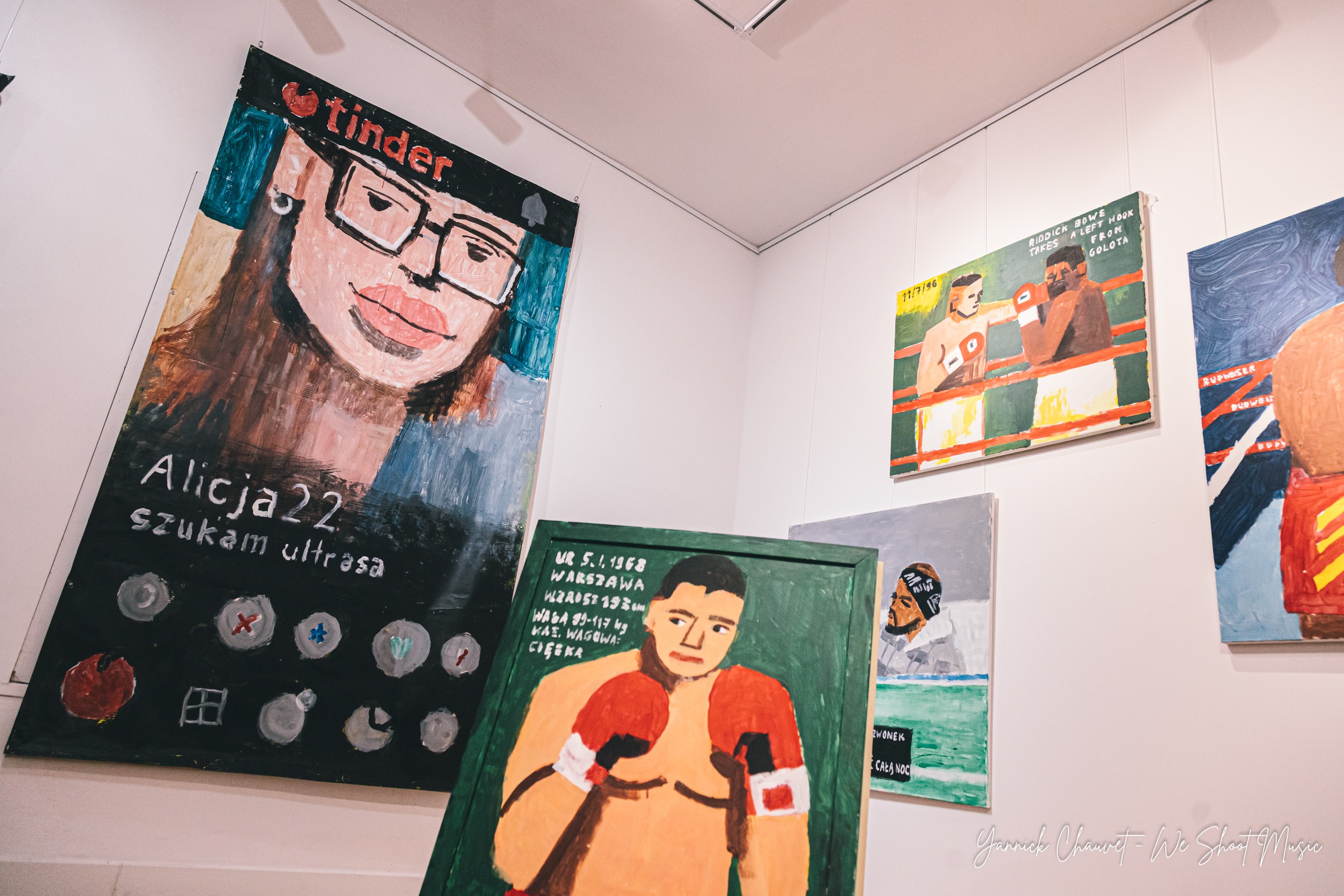
There is a trap waiting inside Tomasz Kaczyński’s “Summertime Love”. You walk into the gallery, glance at the walls and think you’ve cracked it. The paintings look almost childlike. Faces dissolve into simple shapes. Anatomy bends whenever it feels like it. Perspective barely turns up for work. The brushstrokes seem determined to ignore every rule they were ever taught.
It would be very easy to shrug and move on. But don’t do that, give the paintings ten minutes. Maybe fifteen. Long enough for your own memories to start filling in the blanks. That’s when Kaczyński quietly pulls the rug from under you.
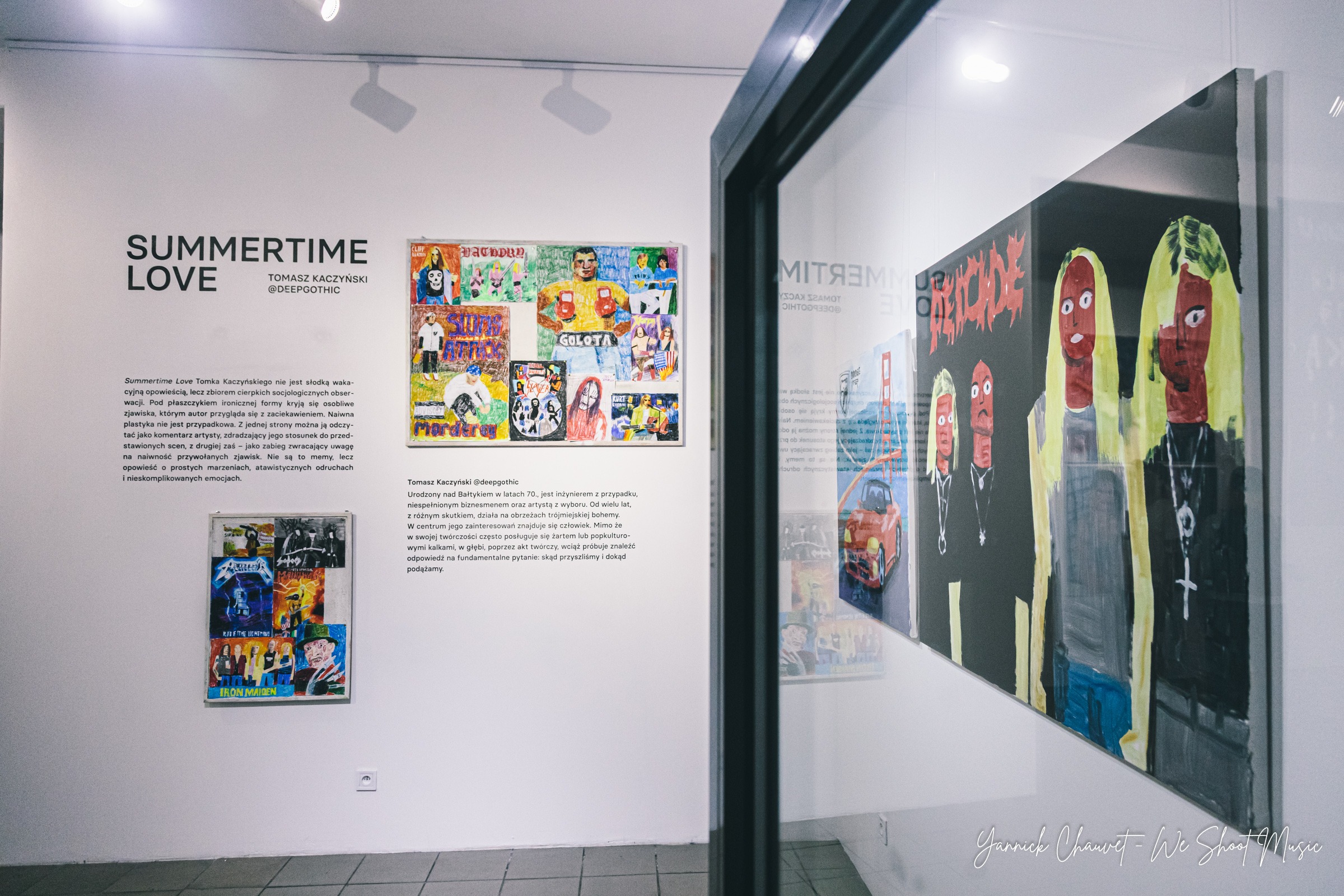
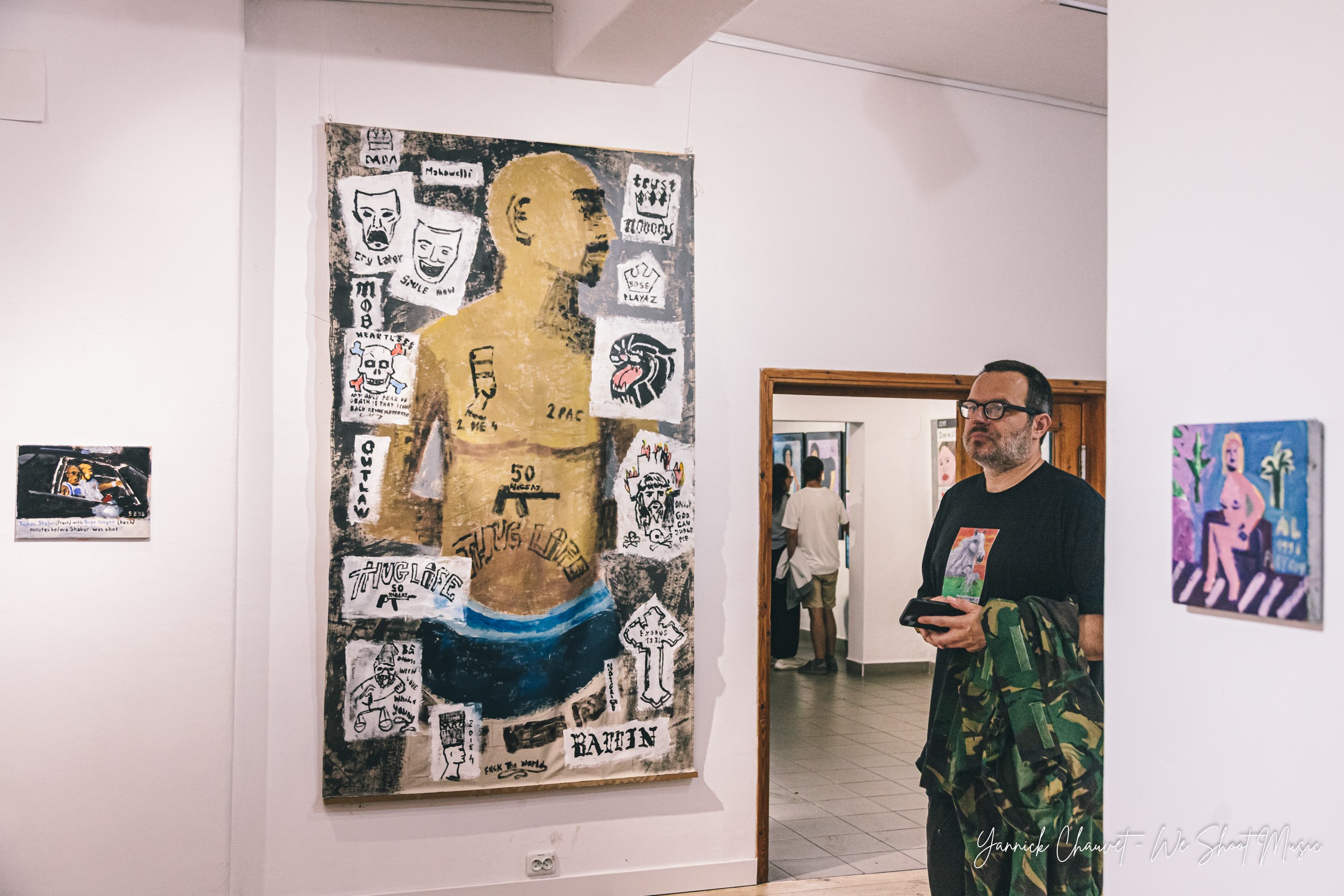
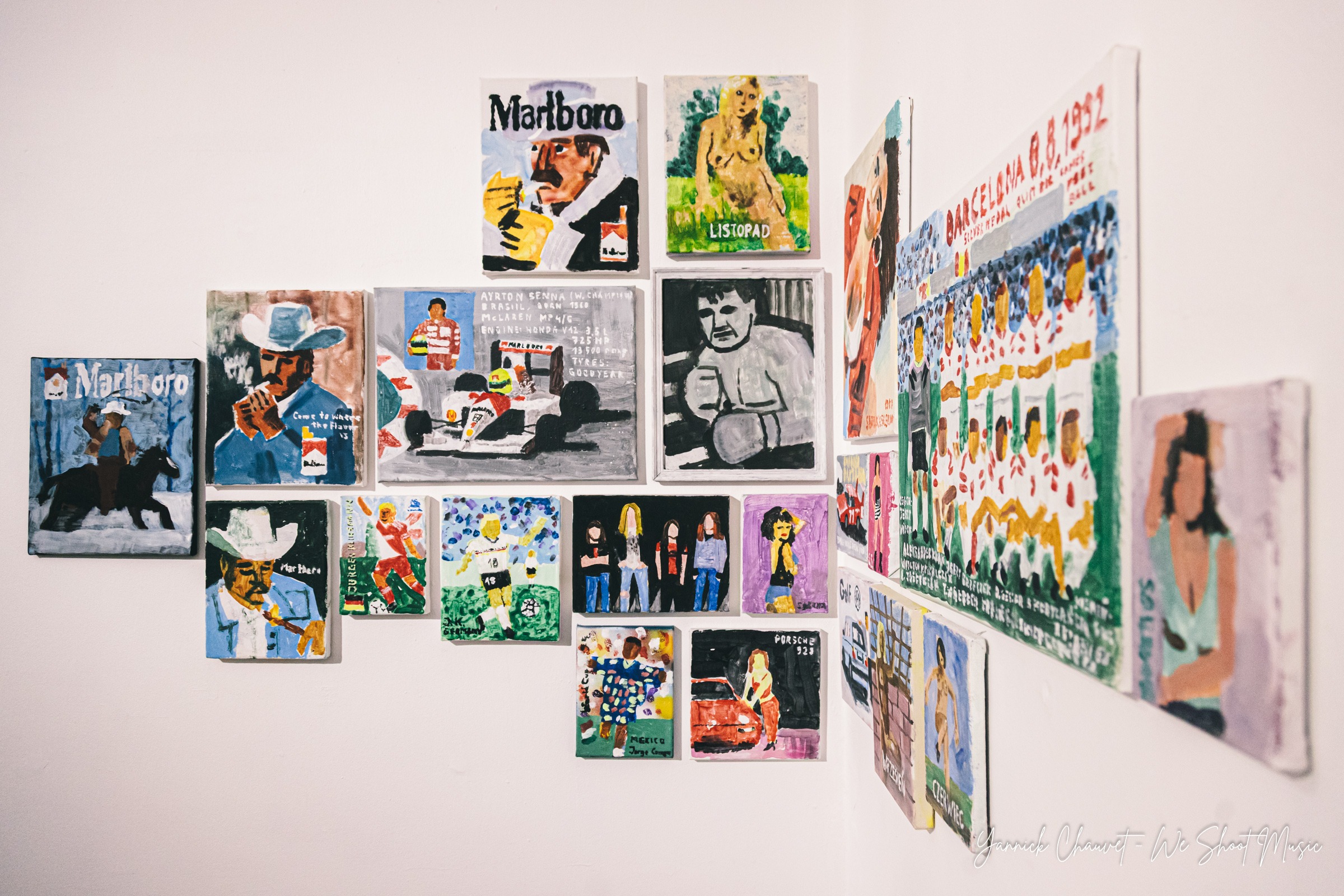
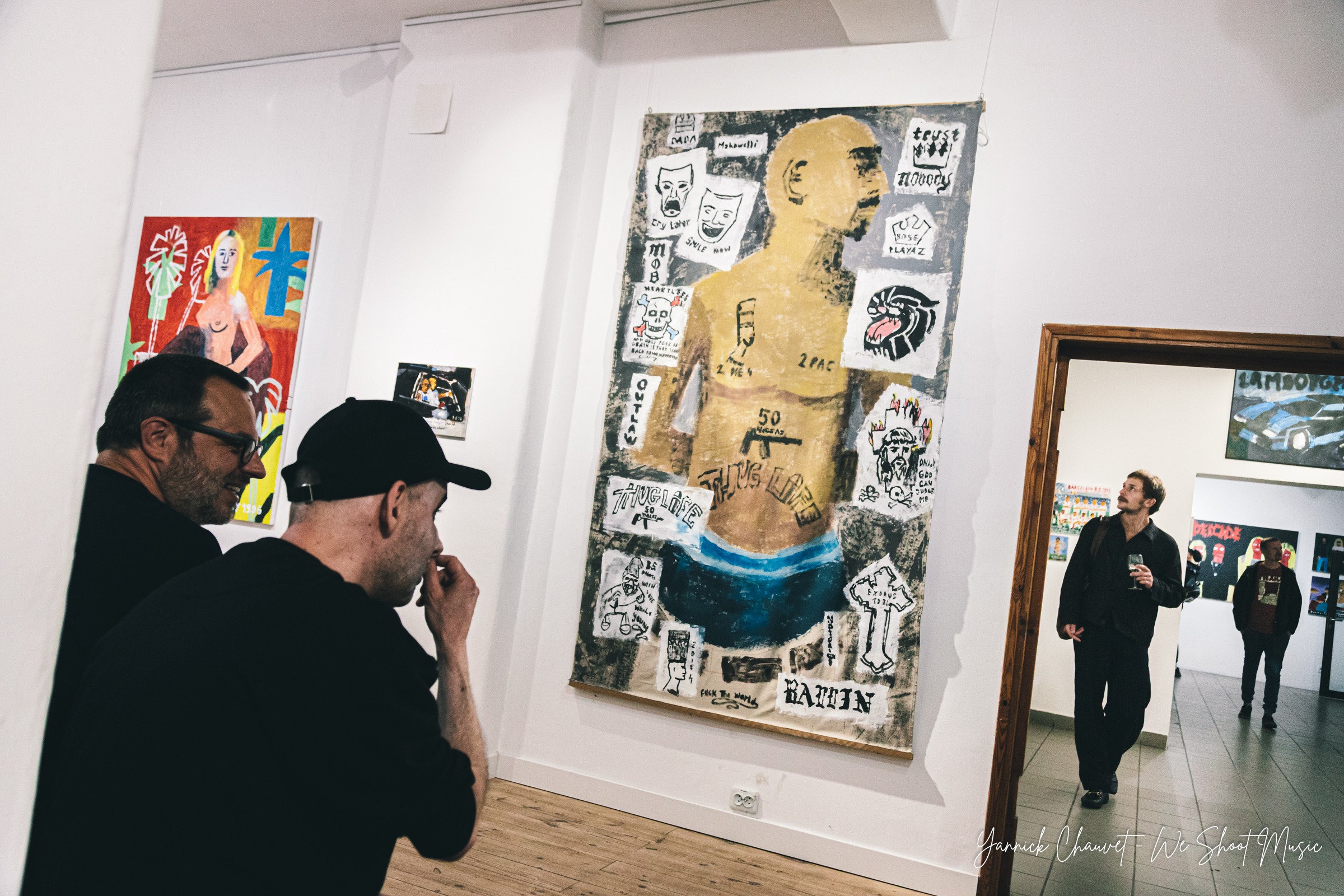
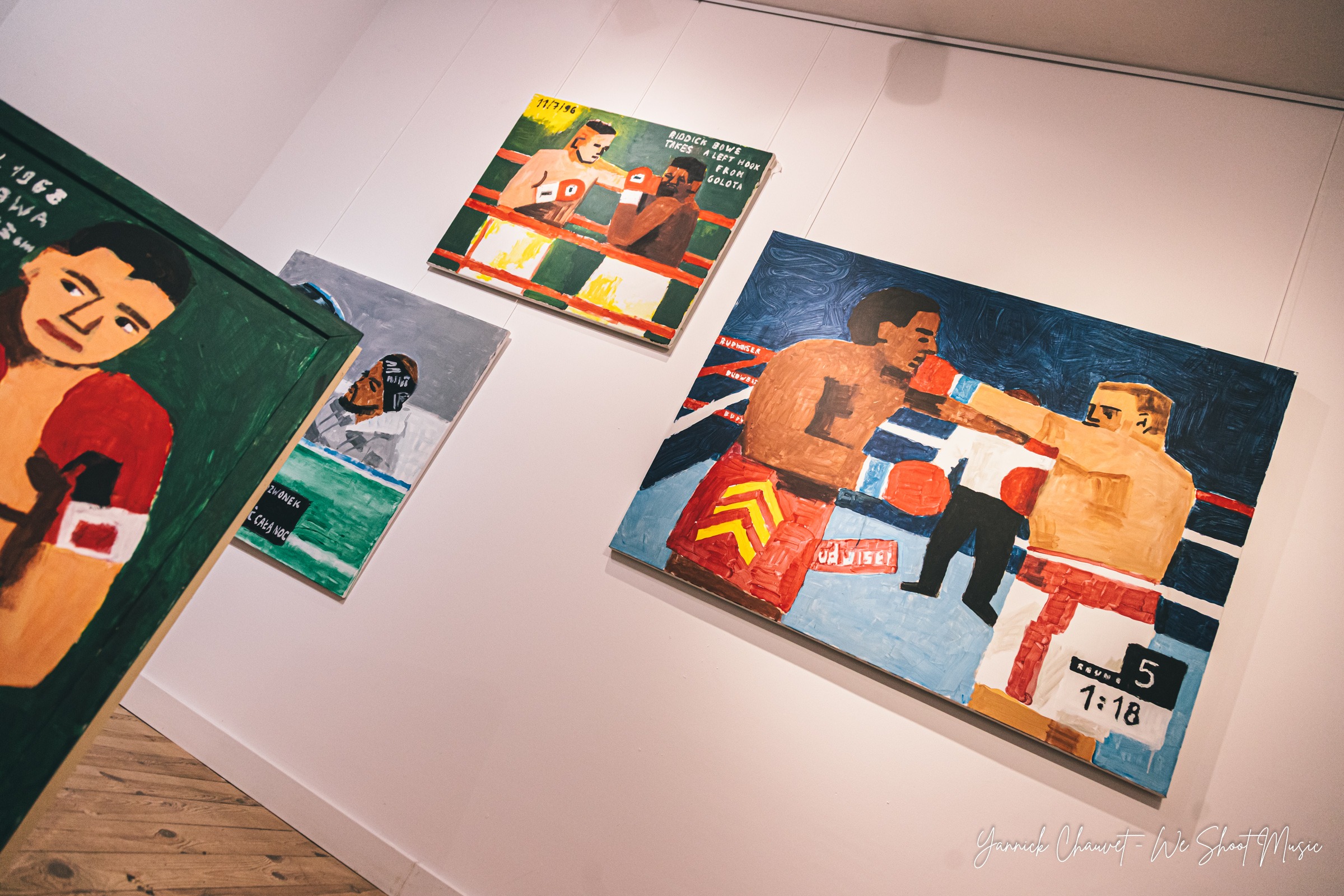
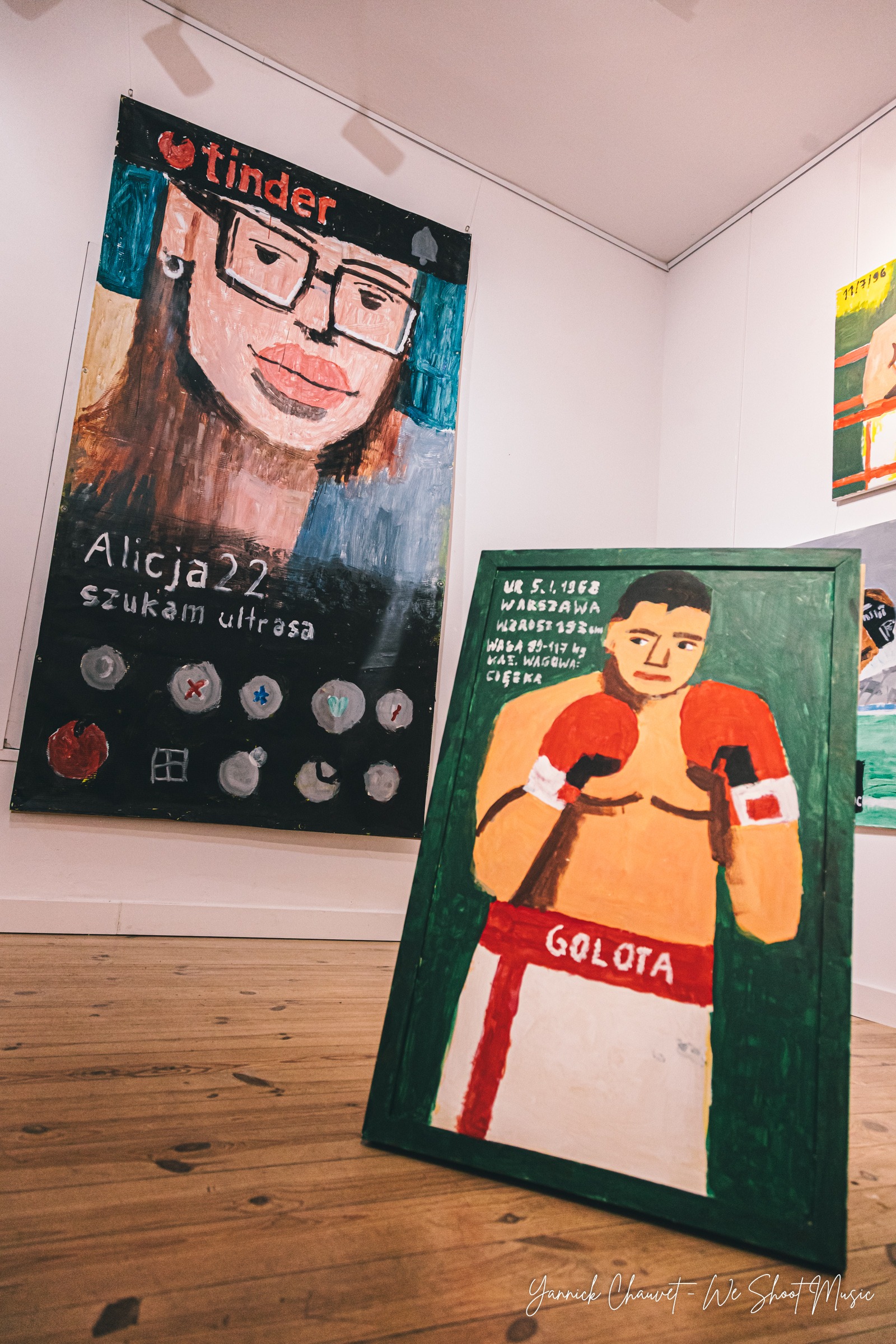
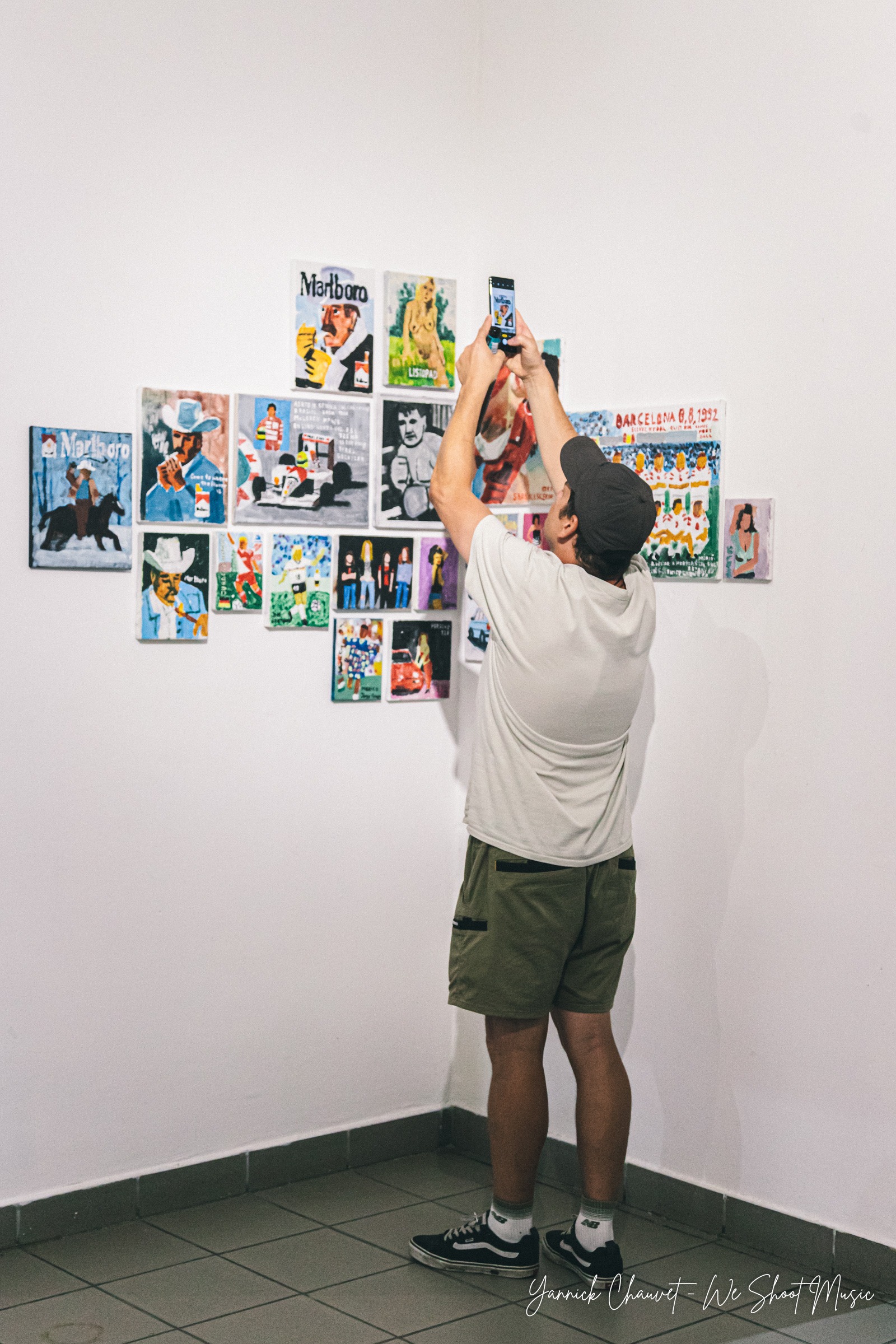
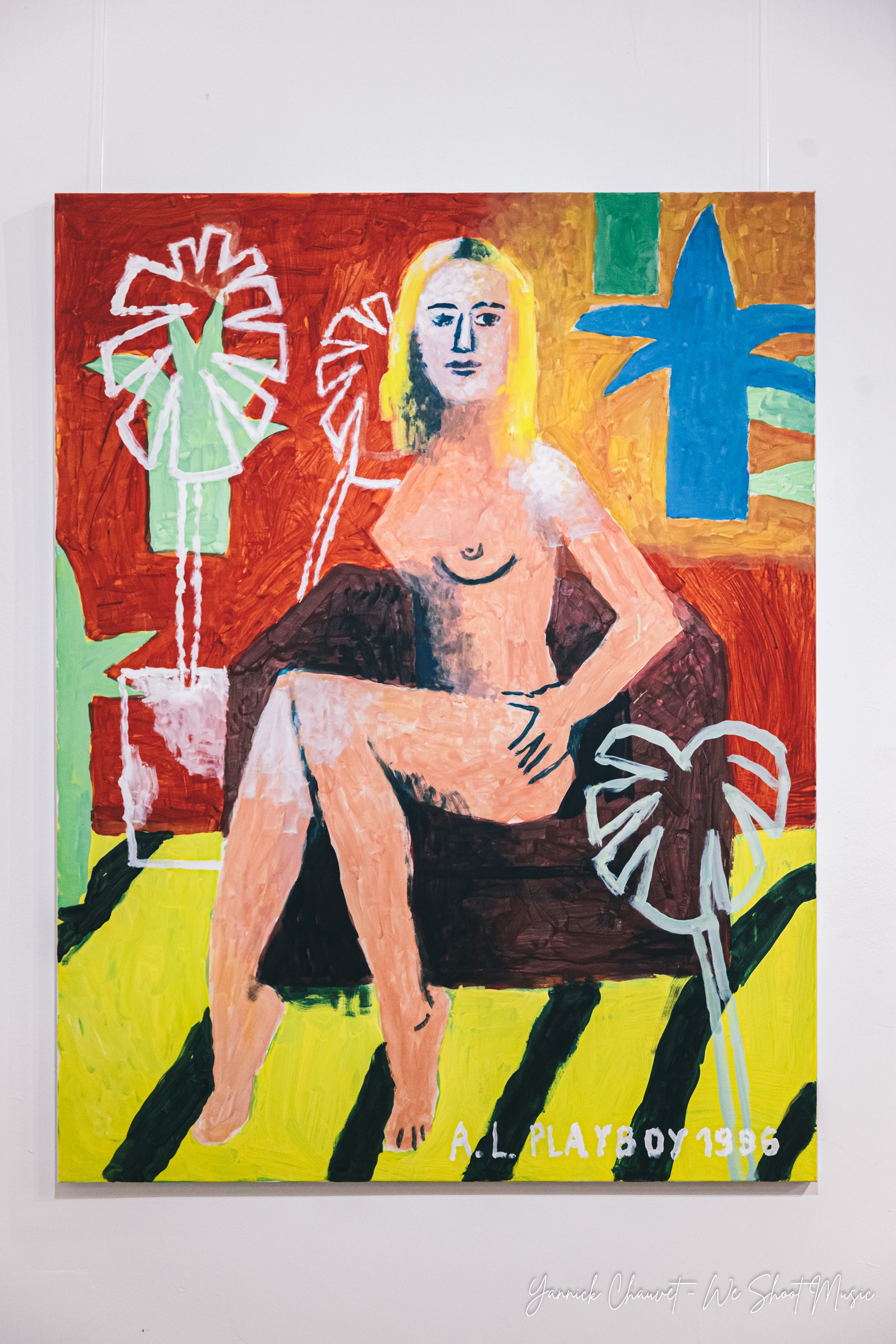
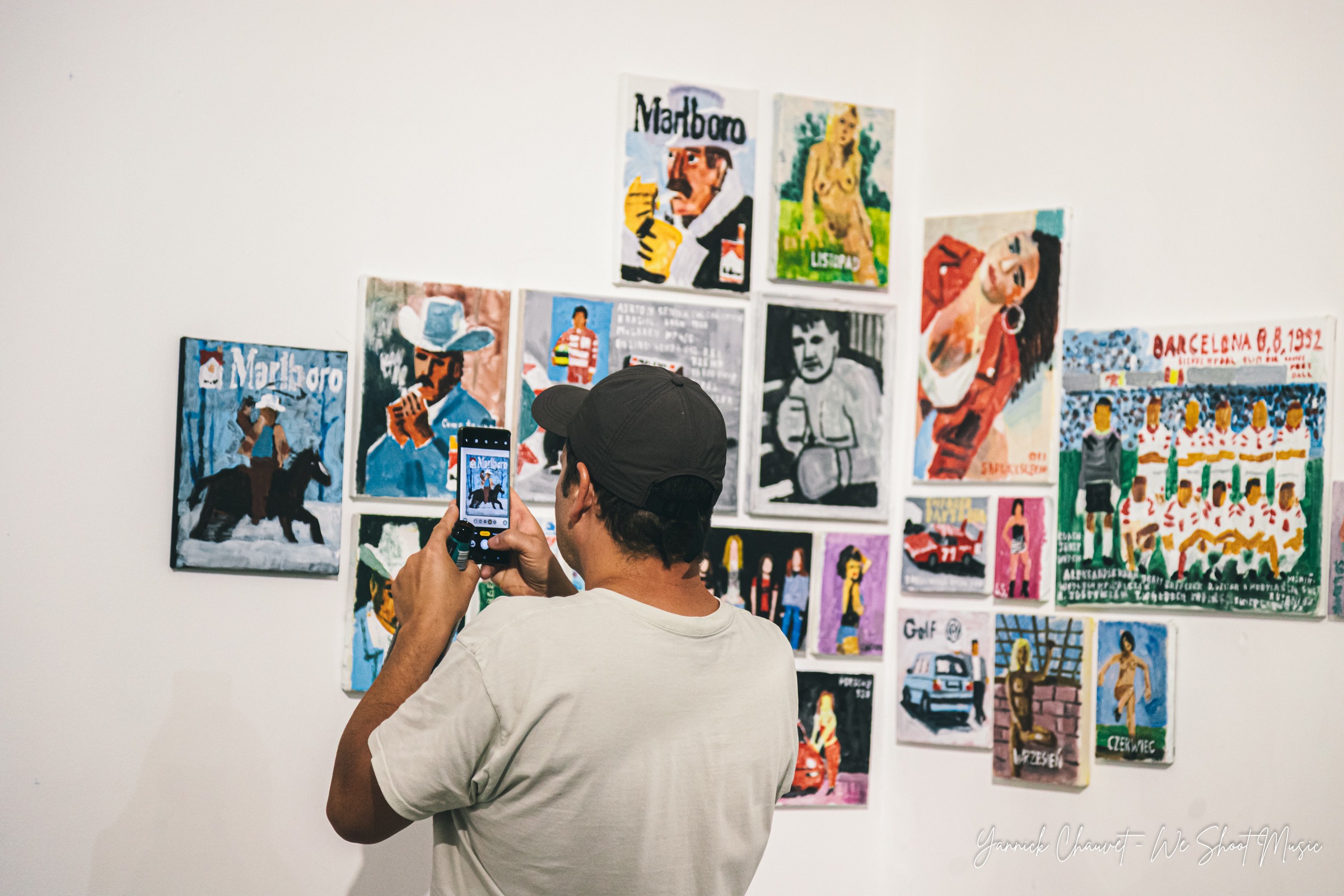
Officially, “Summertime Love” is a collection of paintings inspired by everyday life, music, sport, advertising and the media. In reality, it feels more like someone has emptied an entire generation’s attic onto the gallery floor. Megadeth sits beside Tinder. 2Pac shares space with Andrew Gołota. Playboy rubs shoulders with religious iconography. Football meets Marlboro. Television memories collide with heavy metal mythology.
The exhibition text describes the works as “a collection of bitter sociological observations“. Fair enough. But sociology is only part of the story. What really drives these paintings is recognition. They aren’t asking whether these images deserve to be remembered. They simply assume they already are.
Born on the Baltic coast in the 1970s, Tomasz Kaczyński describes himself as “an engineer by accident, an unsuccessful businessman, and an artist by choice“. It is one of those biographies that suddenly makes perfect sense once you’ve spent half an hour with the work. These paintings aren’t trying to impress anyone with technical virtuosity. They’re trying to trigger something far more dangerous. Memory. Not the polished version we tell ourselves, but the messy one full of logos, songs, magazine covers, sporting heroes, tabloid headlines and half forgotten television moments.
One of the smartest things Kaczyński does is refuse to organise culture into neat little boxes. Music isn’t more important than football. Religion isn’t treated with any greater reverence than pornography. Celebrity isn’t elevated above advertising. Everything occupies the same visual territory because that’s exactly how memory works. We don’t file life under important and trivial. We absorb it all, then spend decades carrying it around without realising.
The deliberately naïve style reinforces the illusion. These paintings don’t look unfinished because the artist lacks the ability to paint realistically. They look unfinished because memories are unfinished. Faces fade first. Details disappear. What survives are colours, hairstyles, logos, album sleeves, moods and the feeling of a particular moment in time. Memory is an unreliable painter. Kaczyński understood that.
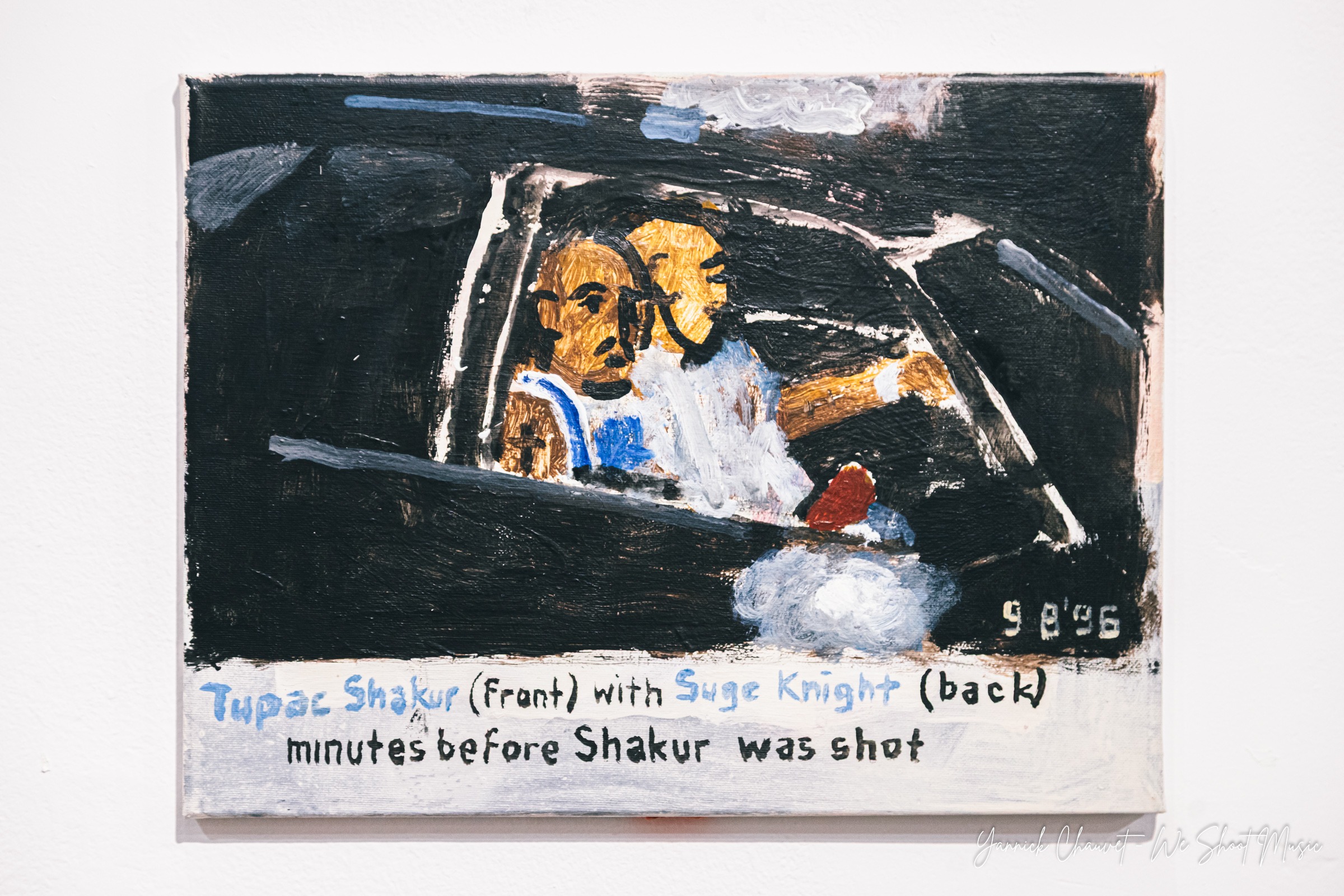
One of the smallest paintings in the exhibition is also one of its most haunting. 2Pac sits beside Suge Knight moments before the shooting that would become one of popular culture’s defining tragedies. There is no violence on the canvas. Just an ordinary moment, made unbearable because history has already supplied the ending.
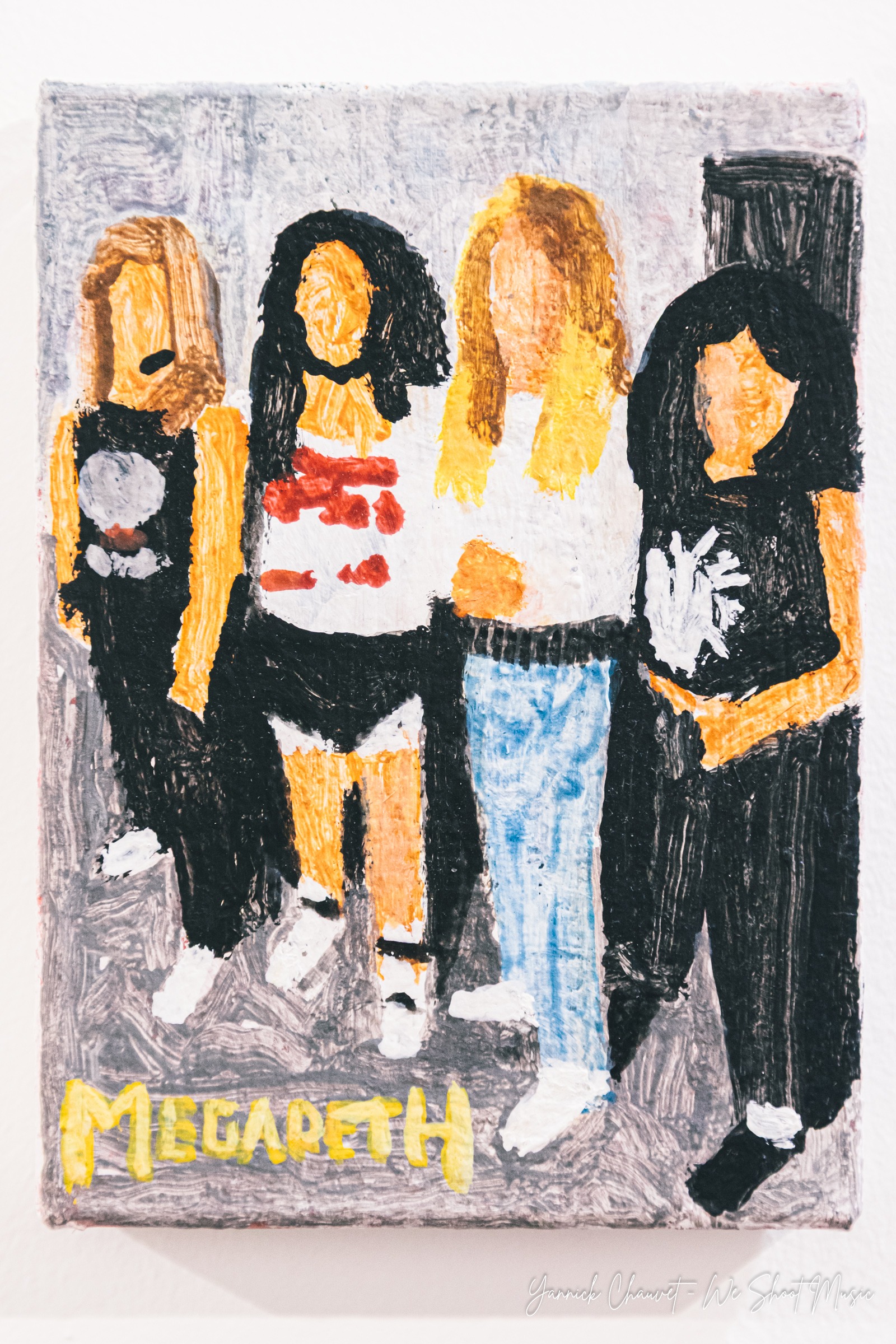
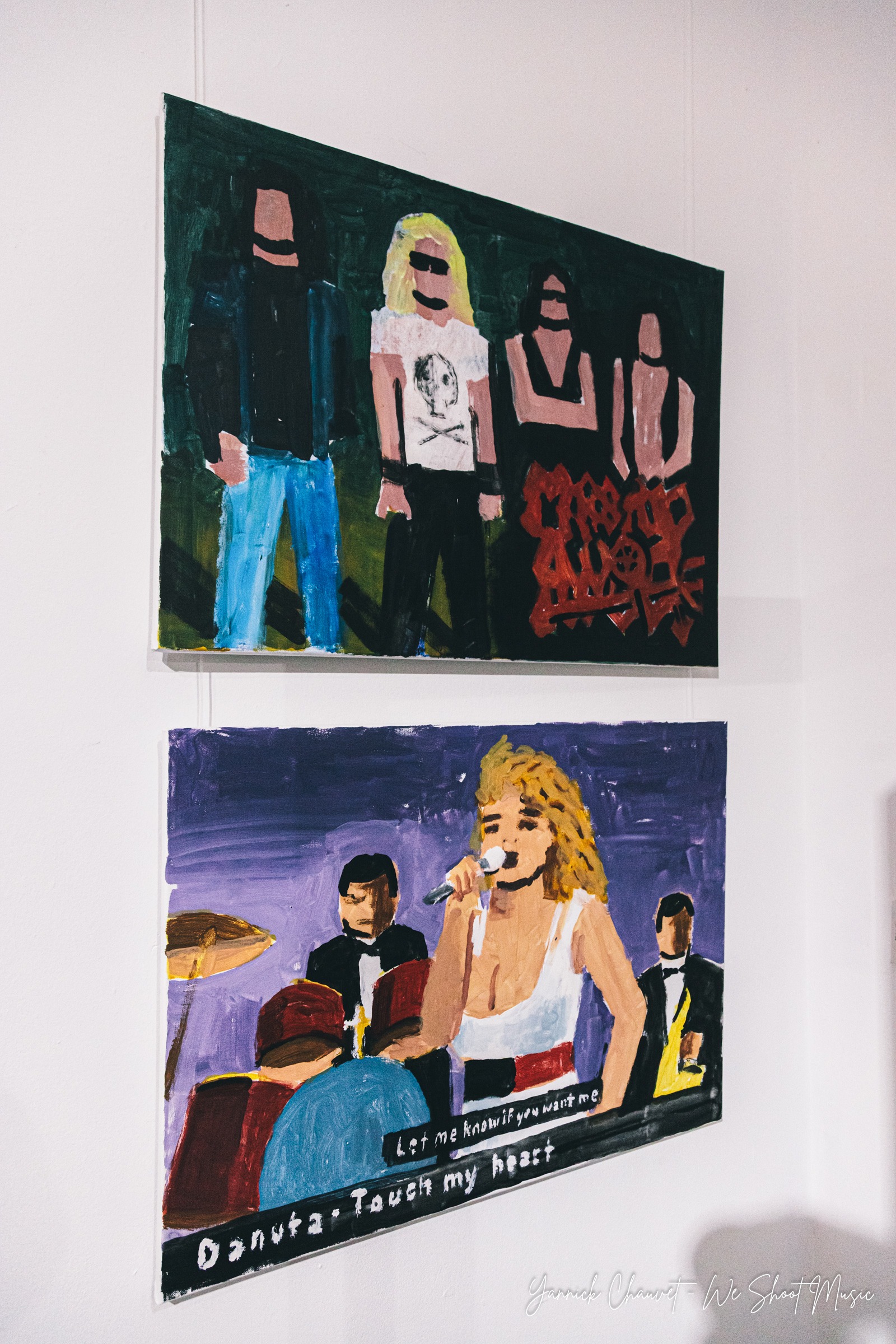
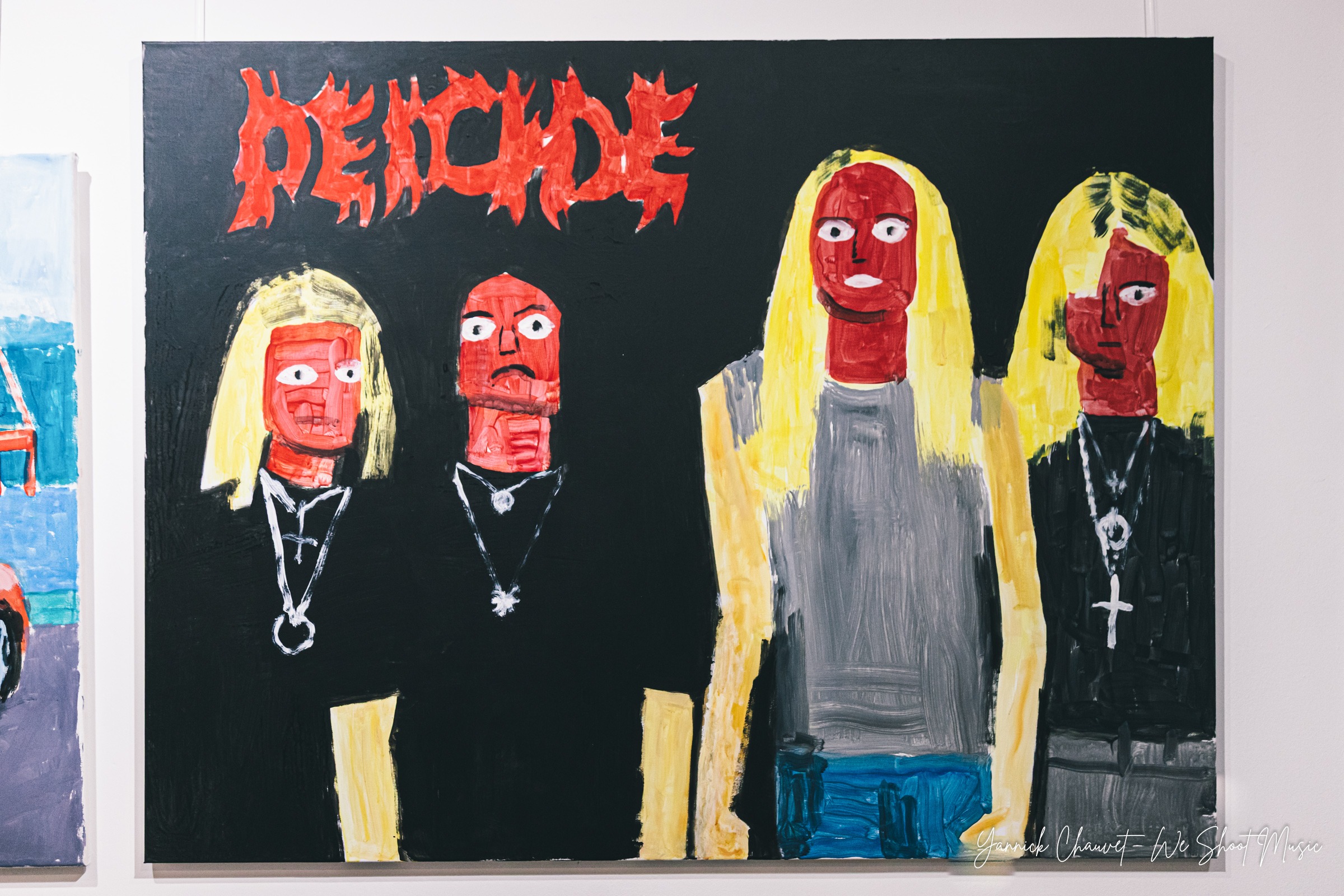
Elsewhere, heavy metal gets exactly the same treatment. The paintings inspired by Megadeth barely resemble photographs at all, reducing one of the biggest bands in metal to a handful of colours and simplified forms. Strangely, they feel more truthful than realism ever could. They’re not portraits of musicians. They’re portraits of remembering those musicians.
“Summertime Love” never asks us to applaud the past or pretend that yesterday was somehow better than today. It simply asks why certain images refuse to die. Why does a Megadeth logo still trigger an emotion? Why does a faded Marlboro advert, an old Playboy cover or the face of 2Pac still carry a charge after all these years? Kaczyński never attempts to explain it. He simply places the evidence in front of us, one painting after another, until the exhibition quietly changes direction. Without quite realising when it happened, you stop looking at his memories and begin leafing through your own.
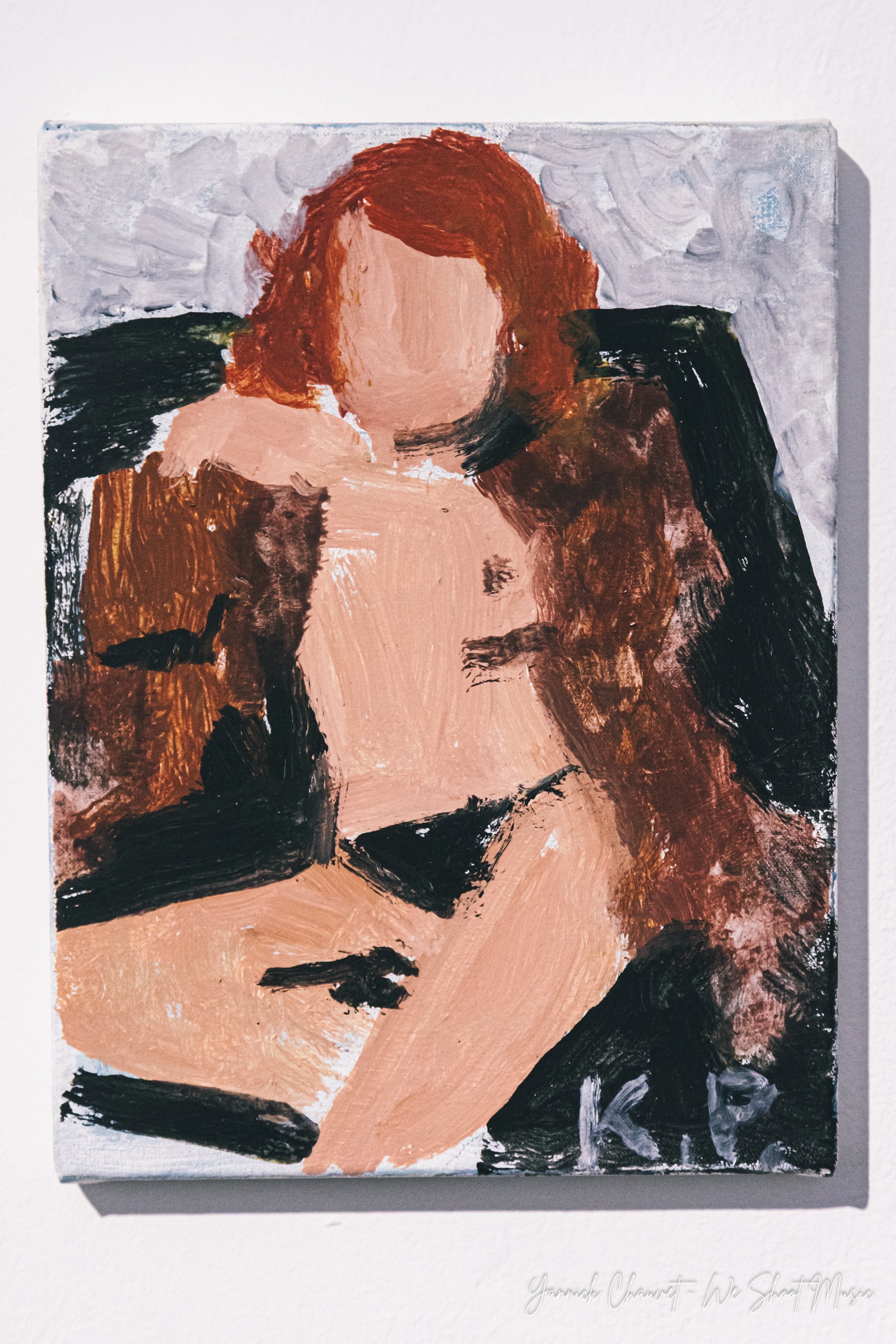
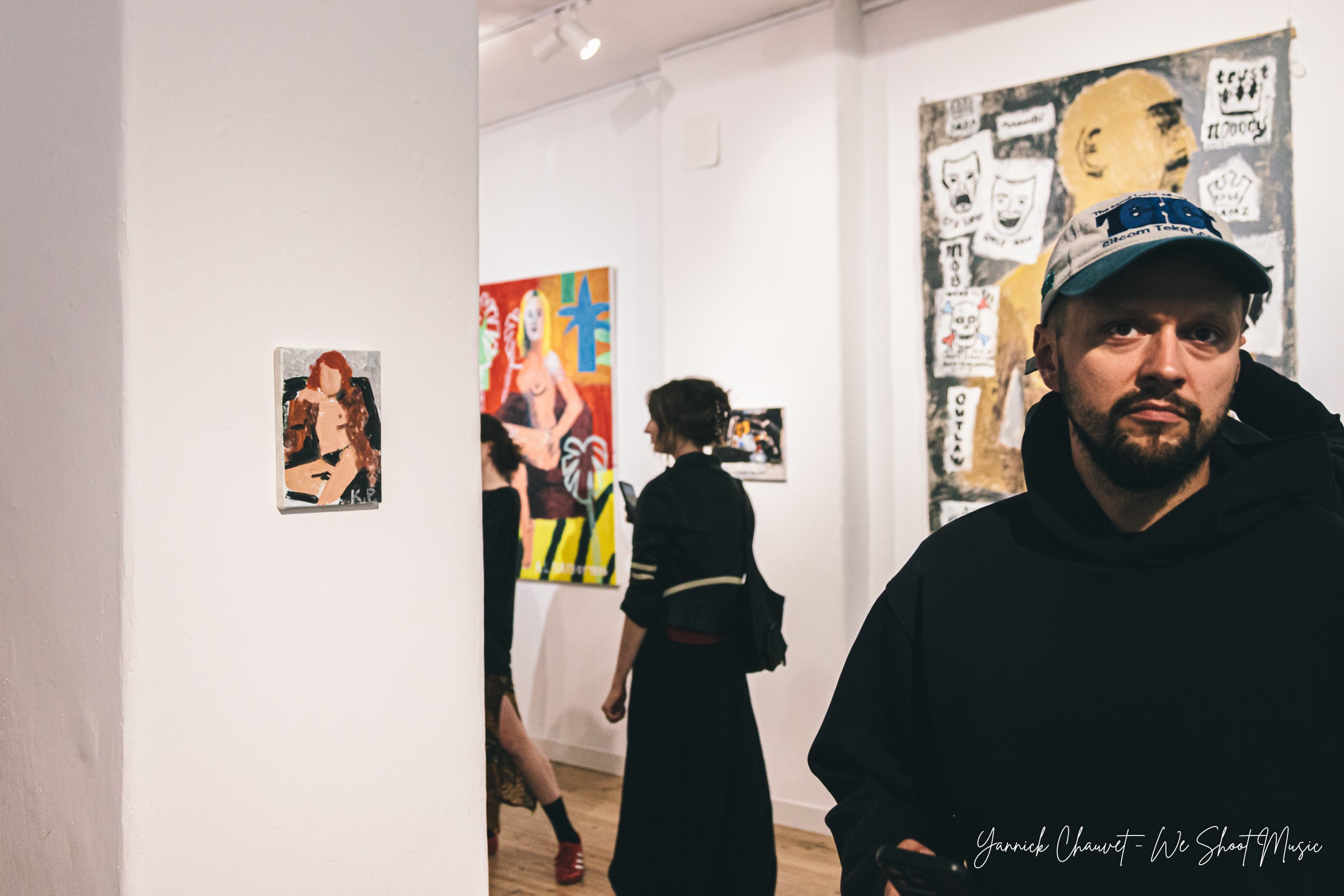
The Tinder inspired portraits bring everything together. Presented like oversized dating profiles, they hang comfortably beside Playboy, Marlboro adverts and heavy metal icons without the slightest hint of irony. Of course they belong together. Every generation invents its own visual language of desire, aspiration and identity. Yesterday’s fantasies arrived in glossy magazines. Today’s arrive with a swipe of a thumb, and Kaczyński has already worked out that a swipe deserves the same wall space as a cigarette advert or a boxer’s fist. He isn’t waiting for Tinder to become nostalgic before he takes it seriously. He’s hung it now, mid life, unfinished, exactly where it belongs, sitting beside everything else we never chose to remember but did anyway.